







Cranberry Sorbet: A Technical Journey Through Acidity, Extraction Maceration, and Freeze-Point Control
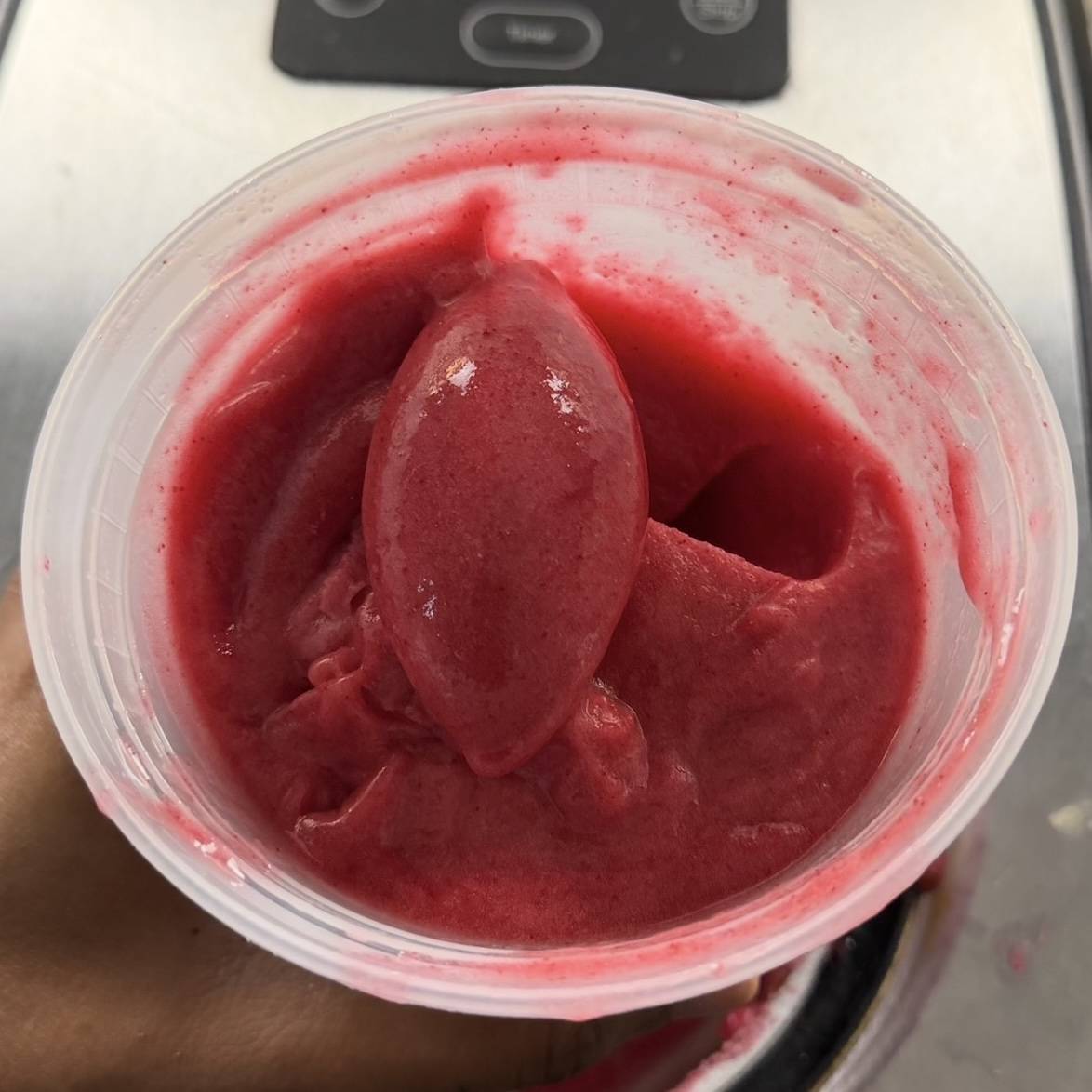
Cranberry sorbet looks simple on the surface—bright color, sharp acidity, clean fruit character.
My process taught me otherwise. Cranberries resist extraction, fight balance, and punish mistakes with tannin, bitterness, and harsh acidity.
This article documents my complete journey from V1 to the final optimized formulation, using techniques inspired by modern sorbet science, professional pastry literature, and my own extraction experiments.
I wrote this for chefs, culinarians, and technical cooks who respect ratios, control variables, and expect precision in frozen dessert formulation.
Cranberry in the American Kitchen

Most Americans only interact with cranberries in two forms:
Sweetened dried cranberries and the iconic Thanksgiving canned cranberry jelly.
These formats hide cranberry’s structural truth. The berry carries a waxy, dense skin—what I call “butcher paper over the flesh.”

This tough epidermis traps acidity and prevents full aromatic release unless I intervene with technique.
This structural challenge shaped every decision in my sorbet development.
Understanding Cranberry Structure

Cranberries contain:
- 0.4–1.0% pectin, far lower than most assume. They thicken slightly but never enough to self-stabilize a sorbet.
- High malic and quinic acidity locked behind tough skin.
- Aggressive tannins concentrated in the skin and seeds.
- Low natural sugar, which forces precise sweetener management.
The berry behaves more like a fibrous botanical capsule than a soft fruit. Any sorbet formula must manage tannin extraction, acid buffering, pectin solubilization, and freeze-point depression in a narrow window.
3. Sorbet Fundamentals That Guided My Formula
I leaned heavily on the core scientific principles detailed in:
- Simple Sorbet Science (Pastry Arts)
- The Science of the Best Sorbet (Serious Eats)
- How to Make Sorbets (IceCreamNation)
Key principles shaped my approach:
A. Target Solids Range: 30–33%
Every expert source agrees:
Sorbets require ~30–33% soluble solids to achieve soft scoopability.
- Below: icy.
- Above: slushy and unstable.
B. Freeze-Point Depression
Sugars lower freezing point depending on molecular weight:
- Dextrose (MW 180) → strongest freezer softening
- Sucrose (MW 342) → moderate
- Glucose syrup (MW ~472) → weaker, adds body
- Corn syrup → viscous, excellent for smooth macrotexture
These tools allowed me to build structure without oversweetening.

C. Stabilization With Gellan
High-acyl gellan forms a micro-gel network that:
- Binds free water
- Limits ice crystal growth
- Improves melt behavior
Cranberries need external structure because their limited pectin cannot carry the load.
D. Extraction Choices Matter
- Cooking choices directly shape tannin load, acidity, and aromatic clarity.
- Cranberry punishes poor extraction more than any fruit I have worked with.
V1 Sorbet Base – The First Attempt
I approached V1 with optimism and paid for that optimism with an imbalanced, tannic base.
V1 Formula (100 g)
- 54.55 g Cranberries
- 23.43 g Water
- 12.73 g Sucrose
- 6.36 g Glucose syrup
- 2.73 g Corn syrup
- 0.14 g Salt
- 0.07 g High-acyl gellan
- No sodium citrate.

Process
I vacuum-sealed the base fully and cooked it sous-vide at 180°F (82°C) for 6 hours, chilled and rested it, then strained. I expected soft aromatics and balanced acidity. Instead, I unleashed maximum tannin extraction.

V1 Results
Brix: 25°Bx
Low for sorbet. Not enough sugar or total solids.

Acidity
Cranberry’s inherent malic/quinic load dominated the palate. Without sodium citrate to buffer the acids, the base tasted sharp and fatiguing.

Tannins
Long thermal extraction under vacuum:
- Pulled deep skin phenolics
- Released seed bitterness
- Coated the palate
- Buried fresh fruit aromatics

Flavor
I created a refined, stable cranberry sauce, not a sorbet base.
The profile included:
- Bright acidity
- Cooked-fruit character
- Aggressive astringency
- Muffled volatile aromas
Texture
After straining, the puree coated the spoon beautifully but lacked the sugar content required for appropriate freeze behavior.
Verdict
V1 failed as a sorbet base but succeeded as a high-tannin cranberry reduction.
Functional Uses for V1
V1 worked in:
- Microwave sponge flavoring
- Red wine jus finishing
- Savory sauces needing brightness
- Jellied cranberry inserts with gelatin
- Buttercream-buffered pastry inserts
I refused to let it anywhere near a plate as a standalone sorbet.
Extraction Experiments: Extraction Maceration vs. Sonication

I ran a dedicated extraction study using the below formulation:
| Component | Weight (g) | Function |
| Cranberries (pin-pricked) | 58 g | Substrate |
| Granulated sugar | 27 g | Primary osmotic driver |
| Glucose syrup | 15 g | Texture + volatile retention |
| Added water | 8 g | Primer solvent for syrup formation |

Traditional Extraction Maceration (180°F / 12 h)

- Aromatic nose with apple-like freshness
- Balanced tannin load
- Clear, pure color
- Good acidity but some acidity remained trapped in the berry flesh
- Sweetness leaned slightly high because acidity did not fully migrate out
Interpretation
This method produced the cleanest cranberry flavor. I considered it a success but learned the berry holds acidity internally unless I break it further.
Sonicated Maceration (40 kHz, 140°F, 90 min)

This trial failed catastrophically.
- Viscous syrup
- Almost no acid extraction
- Zero cranberry character
- Overwhelming sugary taste
- Ultrasonic cavitation failed because high viscosity dampened energy transfer
- The result tasted like sweetened red water

Interpretation
- High-sugar substrates block ultrasound efficiency.
- Cavitation collapses before it reaches the fruit.
- Conclusion
- Traditional extraction maceration wins.
- Sonication requires low-sugar substrates (<10%) and would not suit this sorbet formula.
The Leap Forward: Sodium Citrate as an Acidity Buffer
Cranberry’s harsh acidity required more than sugar balancing. I turned to sodium citrate—a culinary buffer used to manage acidity without killing fruit brightness.
What Sodium Citrate Does
- Raises pH into the 3–4 range where aromatic esters unlock
- Softens malic/quinic acid perception
- Preserves brightness rather than muting flavor
- Reduces perceived sourness
- Reveals hidden notes: apple, vegetal, floral
- Stabilizes anthocyanin color (cranberry reds become more jewel-like)
- Enhances freeze behavior by reducing sharp acid-driven hardness
Culinary Impact
- With citrate:
- Cranberry stops shouting.
- The berry finally sings.
Freeze-Point Depression and Why Cranberry Needs a Sugar System

Cranberry carries almost no natural sugar, so I built a deliberate sugar matrix:
Sucrose – baseline sweetness
- Glucose Syrup – body & freezer softening
- Corn Syrup – viscosity & creaminess
- Salt – enhances fruit perception
- High-Acyl Gellan – micro-gel stabilization
Sources like Pastry Arts and Serious Eats emphasize that sugars control ice crystal formation far more than any other factor. So I targeted 32°Bx with an increase in total sugar content from 24 g per 100 to 30 g, the sweet spot for sorbet texture.

At 32°Bx:
- Only about half the water freezes at extraction (per Pastry Arts)
- Remaining syrup stays smooth and scoopable
- Freeze concentration generates a rich unfrozen phase
- Mouthfeel becomes silky rather than icy
V3.1 – The Breakthrough

After dozens of trials, I landed on the formula in in the below recipe.
Why V3.1 Worked
- 30 g sugar per 100 g base raised Brix to 32°Bx (brix includes the added sugar and other cranberry solids)
- Sodium citrate set pH in a range that supports aroma + color
- Glucose and corn syrup gave body without oversweetening
- 0.08% gellan stabilized ice crystals
- A controlled 6-hour sous-vide at 180°F extracted full flavor without burning out freshness

My Voice Memo Summary of V3.1
- “Sweetness is perfect.”
- “Acidity is characteristic but soft and pleasant.”
- “Vegetal and apple notes finally appear.”
- “Bitterness is mild and integrated.”
- “No more sour than lemon sorbet.”
- “This is the best version—ready to freeze.”

The sorbet finally tasted like cranberry itself, not cranberry sauce.
The result tastes like cranberry liberated, finally allowed to express clean fruit rather than raw acidity.

Cranberry Sorbet
A balanced cranberry sorbet base with clean, bright acidity and a perfect 32 °Bx sweetness/solids level. Sodium citrate softens cranberry’s natural sharpness while preserving brightness, allowing apple-like and subtle vegetal aromatics to come forward. The mild bitterness typical of cranberry remains in the background, adding depth without harshness. Buffered to a pH range that enhances aroma and stabilizes the rich red color, this base delivers a clear, expressive cranberry profile and is ready for freezing.
Ingredients
100 G Base
- 49.48 g Cranberries
- 19.79 g Water
- 18.00 g Sucrose
- 9.00 g Glucose syrup
- 3.00 g Corn syrup
- 0.15 g Salt
- 0.08 g High-acyl gellan
- 0.50 g Sodium citrate
1000 g Base
- 494.8 g Cranberries
- 197.9 g Water
- 180.0 g Sucrose
- 90.0 g Glucose syrup
- 30.0 g Corn syrup
- 1.5 g Salt
- 0.8 g High-acyl gellan
- 5.0 g Sodium citrate
Instructions
- Blend all ingredients on high until the mixture reaches 79°F and the cranberry skins are fully broken down into a uniform emulsion.

- Vacuum chamber-seal the mixture for 30 seconds. You can also use a ziplock with water displacement method.
- Cook sous-vide at 180°F for 6 hours.
- Chill the bag in an ice bath, then refrigerate for 18 hours to rest and settle.
- Strain through a fine mesh, stopping when the weight is reduced by roughly 20%.

- For condenser-model machines, pre-freeze the bowl for about 20 minutes or until the bowl temperature drops below 10°F.

- Churn for approximately 25 minutes or until the base reaches the desired overrun or measures comfortably under 23°F.